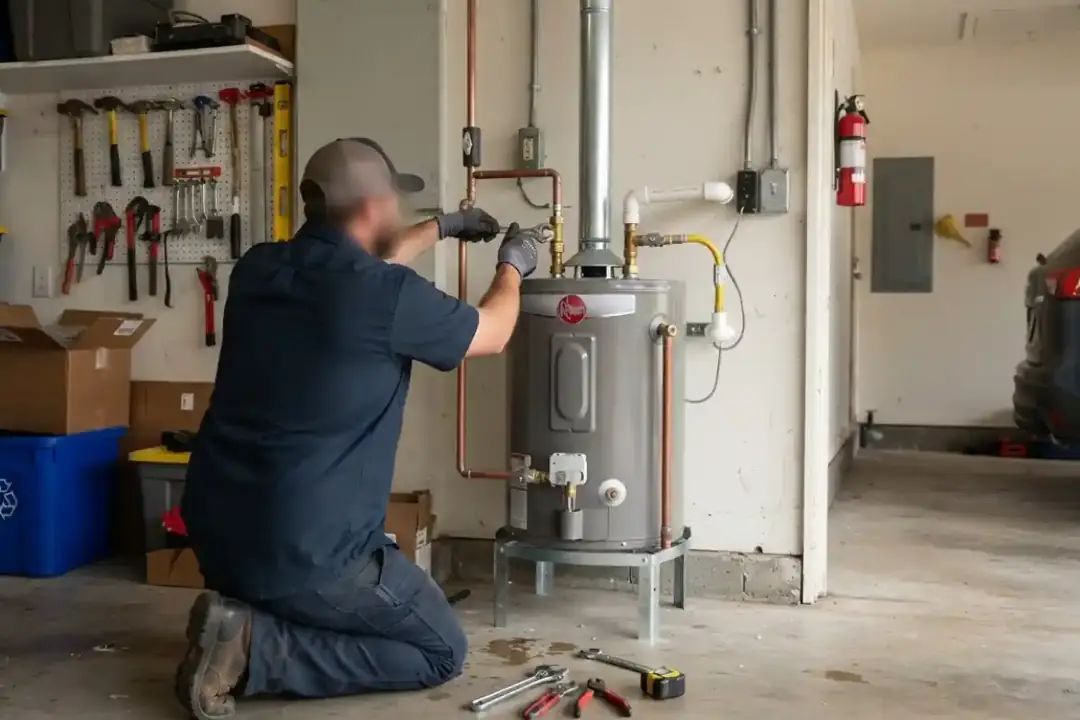
Sizing a water heater for your household
Size is driven by how much hot water you use in the busiest hour, not by the number of bathrooms alone. A family that showers back to back in the morning needs a larger first-hour rating than a couple who spreads use through the day.
We start by asking when your hot water runs out. That answer, plus the number of bathrooms and any big soaking tubs, tells us whether a standard tank, a larger tank or an on-demand unit fits. If your current unit has already failed, our water heater replacement page covers the emergency path.
Choosing between unit types
| Type | Strength | Watch for |
|---|---|---|
| Standard tank | Lower upfront cost, simple design | Standby heat loss, tank life. |
| Larger tank | Handles busy mornings | Needs room and a stronger base. |
| Tankless | Continuous hot water, small footprint | Gas line size, venting and descaling. |
| Hybrid heat pump | Very efficient electric option | Needs air space and a condensate drain. |
What a proper installation includes
- A drain pan with a drain line where the location needs it.
- A temperature and pressure relief valve with correct discharge piping.
- An expansion tank where the house has a closed water system.
- Correct venting and combustion air on gas units.
- Dielectric unions or other fittings that keep dissimilar metals apart.
Tell us about your household and we will recommend a size before we quote.
Call (301) 936-0389Common mistakes in planned installs
- Choosing a size by the old tank's number and not by real hot water use.
- Skipping the drain pan in a finished space where a leak would cause damage.
- Reusing old flexible connectors that have corroded.
- Forgetting an expansion tank where the house has a closed system.
Each of these is cheap to avoid at install time and expensive to fix afterward. A planned job is the best moment to correct the shortcuts of an earlier one, and we point them out as we go.
After the install
Before we leave, we show you the shutoff valves, the temperature setting and the relief valve, and we mark the date on the unit. A flush once a year and a quick look for moisture are the habits that stretch a heater's life.
What shapes the price of an installation
Planning around a Rockville home
Plumbing permit and inspection rules in Montgomery County run through WSSC Water, which has its own plumbing code. We confirm what your job needs and schedule the inspection where it applies, so you are not left with an unsigned-off heater.
Some Rockville houses have the heater in a small closet or a crawl space. That affects the type we recommend, because a tankless unit may free the closet but needs venting through the wall. Newer King Farm homes usually have a utility room with room for either. Planning a bigger project? See plumbing installation and repiping, or our Potomac page for larger lots.
Where this comes from. According to Montgomery County's permit guidance, plumbing permits are handled through WSSC Water, which has its own Plumbing and Fuel Gas Code. Check with WSSC Water for what your job needs, because rules change.
Water Heater Installation questions from Rockville homeowners
Yes, if venting, gas or electric service and drainage allow. We look at the location before we quote.
Plumbing permits and inspections in Montgomery County run through WSSC Water. We confirm what your job requires and handle the steps.
We ask about your busiest hour of hot water use, the bathrooms and any large tubs, then match a first-hour rating to it.
For households that run out of hot water or want to free floor space, often yes. It needs adequate gas supply and yearly maintenance.